 Connecting Ambitions to World-Class Universities


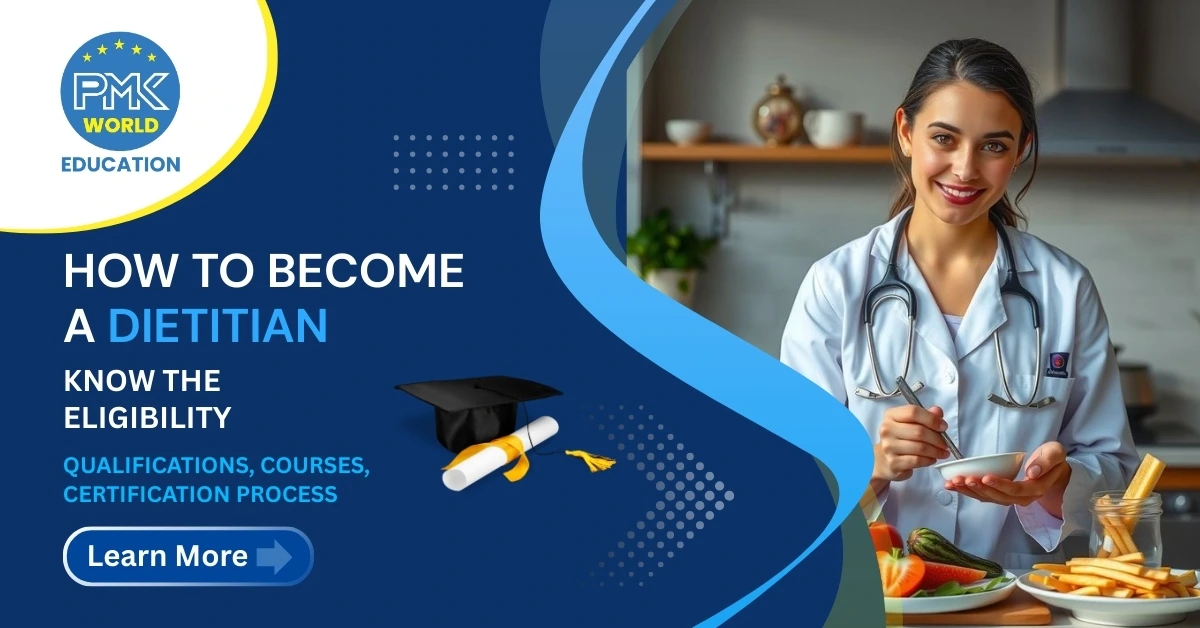
If you are interested in helping people eat better and stay healthy, figuring out how to become a dietitian might be just the right path for you. Dietitians are the go-to experts for nutrition advice, whether it’s managing illnesses like diabetes or just boosting everyday wellness. This article breaks it all down, step by step, pulling from solid sources to give you the real scoop.
At PMK World Education, we focus on study abroad consulting and have guided plenty of students into dietetics programs around the world, easing the way for admissions.
Getting to Know the Dietitian Profession
Dietitians are right in the middle of healthcare, putting together meal plans and nutrition tips that really work. Take the dietitian job role, it’s all about checking what patients need and crafting diets that fit them perfectly. This isn’t just casual advice; it’s based on real science.
The Bureau of Labor Statistics points out that more people are paying attention to staying healthy before problems start, which is why jobs in this area are on the rise. That said, jumping into this career means committing to some serious schooling and practical knowledge.
The dietitian profession mixes science with talking to people and really caring about their progress. You could end up in a hospital, a clinic, or even running your own setup.
What You Need to Qualify as a Dietitian
People often search on Google for things like eligibility criteria, and it’s a fair question. Usually, you’ll want a solid high school base in sciences, think biology or chemistry. Most paths start with at least a bachelor’s degree, though some spots ask for more.
In the US, for example, they’ve bumped it up to a master’s as the entry level for getting certified. No age limit really, but being in good shape helps if you’re dealing with patients day in and day out.
On top of that, it’s about who you are as a person. If you like solving puzzles and keeping up with new studies, you’re in a good spot. Coming from outside science? No worries, some programs offer catch-up classes. We’ve had students at PMK World Education make that switch by picking courses with those extra basics built in.
What Education Do You Need?
Schooling is the foundation when you’re learning how to become a dietitian. Kick off with a bachelor’s in nutrition and dietetics from a recognized school. You’ll dive into subjects like biochemistry, managing food services, and therapy through nutrition. That typically runs about four years.
But it changes depending on where you are. A master’s can give you an edge with deeper insights. The Academy of Nutrition and Dietetics suggests sticking to ACEND-accredited programs to make sure you’re getting top-notch training. They blend book smarts with real skills you can use.
Thinking about heading overseas for school? There’s a ton of choices. As study abroad consultants, we’ve at PMK World Education helped students land spots in leading universities in places like the US and UK, where the focus is on getting your hands dirty with practical stuff.
Hands-On Training and Internships
Once the classes are done, you need real practice under supervision. That’s around 1,000 to 1,200 hours working with a pro who’s already licensed. You might bounce between hospitals, community spots, or kitchens. In a clinic, say, you’d put what you’ve learned to use helping actual patients.
This part connects the dots between theory and the real world. Pick spots that match what excites you, like nutrition for athletes. Some degrees include this built-in, but you can find separate ones too. Finishing up here boosts your confidence and checks the box for certifications.
We at PMK World Education point students toward options with internships included, so you skip the extra applications. It’s during this time that many figure out their favorite part of the nutrition and dietetics career.
Getting Certified and Licensed
With training wrapped up, you’ll take a national test to get certified. In the US, that’s handled by the Commission on Dietetic Registration. It covers everything from caring for nutrition needs to running programs. Pass that, and you earn the title of registered dietitian, which shows you’re the real deal.
Licenses depend on where you live, some places want extra classes ongoing. To stay trustworthy, keep learning new things. That lines up with building experience, expertise, and reliability in the field.
What’s the Job Market Like?
Things are looking up for dietitians. Jobs are expected to grow by 6 percent between 2024 and 2034, outpacing a lot of fields, with roughly 6,200 spots opening each year. Come 2030, that could mean even more opportunities as folks get older and deal with ongoing health issues. With obesity climbing, there’s a big push for prevention.
As a healthcare nutrition professional, you’re key in all this. Pay averages around $66,450 a year, but it goes up with time on the job. That’s part of what draws people to the dietitian career path.
What Does a Clinical Dietitian Do?
In a hospital setting, clinical dietitian responsibilities cover checking how nourished someone is, planning out their meals for treatment, and keeping an eye on how it’s going. You team up with doctors to make sure food helps healing. Accuracy is huge here, since mistakes can mess with recovery.
For heart issues, you might suggest cutting salt way back. Jobs like this show how dietitians really matter in medical groups.
How to Become a Dietitian in Different Countries
Paths change from country to country, which is great if you’re eyeing an international gig. Here’s a table pulling from reliable info to compare a few.
| Country | Degree You Need | Practice Hours | How to Get Certified |
| US | Master’s starting 2024 | Over 1,000 hours | CDR test; some states add licenses |
| UK | Bachelor’s or Master’s in dietetics | Built-in placements | Register with HCPC |
| Australia | Accredited Bachelor’s or Master’s | Part of the program | APD through Dietitians Australia |
| Canada | Bachelor’s in food or nutrition | A year of training | National test plus provincial sign-up |
| India | Bachelor’s or Master’s in nutrition | Half-year internship | RD via IDA |
| Germany | Bachelor’s or similar | Required practice | Federal sign-up |
| France | Under bachelor’s level | Depends | Get professional cert |
| Japan | Bachelor’s or other ways | Varies | National license |
This setup highlights study abroad possibilities. At PMK World Education, we handle the applications for these, making sure you hit the requirements without the headache.
Growing Your Skills with Real Experience
Starting with on-the-job stuff builds your cred. Shadowing a dietitian lets you see the day-to-day. And don’t stop learning, that keeps you sharp and trusted.
By 2030, with more people around, niches like kid nutrition will boom. So, zero in on specialties for better shots at jobs.
Wrapping It Up
All in all, how to become a dietitian boils down to schooling, practice, and getting certified. Stick to these, and you’re set for a field that’s growing strong into 2030. No matter if you’re staying local or going abroad, spots like PMK World Education can smooth out admissions.
Also Read
How to become a psychotherapist
How to become an interior decorator
How to become a virtual assistant